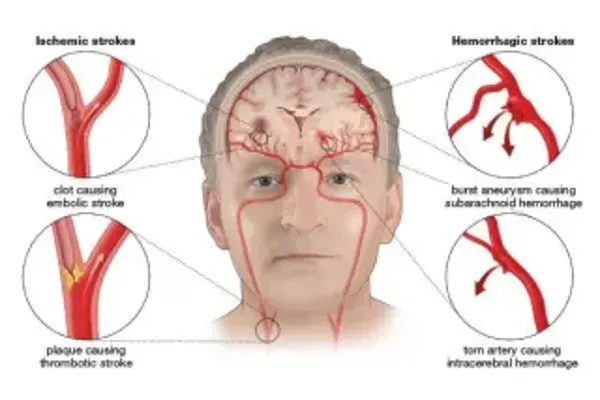
Recognizing a Stroke: Life and Time Matter
I heard a story the other day and decided to share it, because it could save a life.
Here's how it went...
It was a seemingly ordinary evening when Carla's life took a tragic turn. Her story serves as a heart-wrenching reminder of the critical importance of recognizing the signs of a stroke and acting swiftly. In this blog post, we'll delve into Carla's harrowing experience and the valuable insights from neurologists and cardiologists on the timely identification of strokes. Join us as we explore the four stages of recognizing a stroke and the power of awareness in saving lives.
Carla's Story: A Harrowing Reminder: Carla's evening started with a simple trip and fall during a gathering. Despite appearing a bit pale and unsteady, she dismissed it, attributing her stumble to her new shoes. Friends offered their assistance, and she continued to enjoy the evening. However, what unfolded later that night serves as a stark reminder that strokes can strike unexpectedly.
Carla's husband had to rush her to the hospital, but tragically, she passed away at 11 pm. Carla had suffered a stroke while grilling, and her friends, unaware of the signs, couldn't intervene in time. This heart-wrenching tale emphasizes that strokes don't always result in immediate, visible consequences. Some individuals, like Carla, may remain in a desperate situation, requiring urgent medical attention.
The 3-Hour Window: A Neurologist's Insights: A neurologist emphasized the critical importance of recognizing a stroke within three hours of onset. Within this crucial time frame, medical interventions have the potential to reverse the effects of a stroke. However, identifying a stroke and seeking prompt medical help can be challenging.
Recognizing a Stroke: The Four Stages: Here's a simple and effective way to recognize the signs of a stroke:
Ask the person to smile: If they can't smile or their smile is uneven.
Ask them to pronounce a simple sentence: Listen for any slurred or incomprehensible speech.
Ask them to raise both arms: If they're unable to raise both arms or can only do so partially.
Ask them to stick out their tongue: Look for any signs of tongue deviation or twisting to the left or right.
If you or someone you know encounters difficulties with any of these stages, do not hesitate. Call an ambulance immediately, and when you do, describe the person's symptoms over the phone. Early intervention can make all the difference in minimizing the impact of a stroke.
Raising Awareness to Save Lives: A cardiologist emphasized the incredible power of awareness. The more people who are educated on how to recognize a stroke, the greater the chances of saving a life—perhaps even our own. In an age inundated with digital messages, occasionally, we stumble upon something as profound as this. Sharing life-saving knowledge can genuinely make a difference.
Let's make it our mission to equip ourselves and others with the information needed to recognize the signs of a stroke and act swiftly. By spreading the word, we can potentially save lives. Carla's story serves as a poignant reminder of the importance of timely action.
Stay safe, stay informed, and together, let's make a difference.
