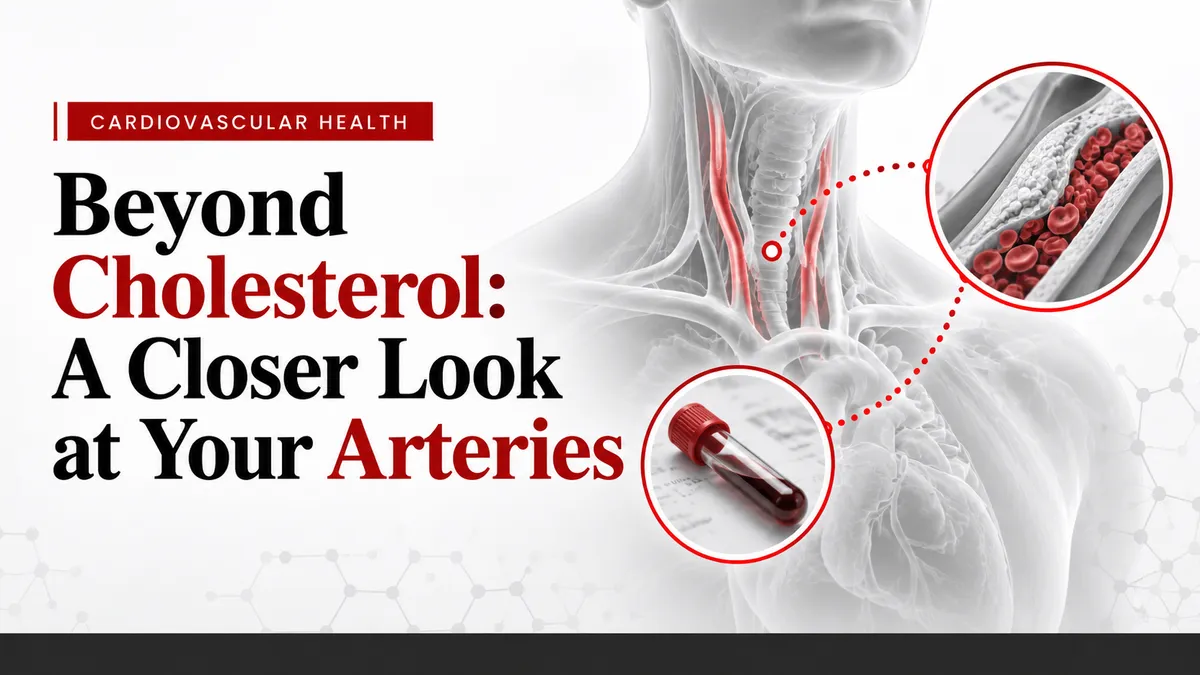
Beyond Cholesterol: What Can an Artery Scan Add to Your Prevention Picture?
Vasolabs | Artery Scan
Blood tests and arterial imaging offer different insights into cardiovascular health. Understanding both can support a more informed conversation with your clinician.
If you have had a routine blood test, you probably know your cholesterol numbers. Maybe you have heard your LDL, HDL, or triglycerides discussed at a checkup.
These numbers matter. But many health conscious adults and the clinicians who care for them ask a natural next question: What is actually happening inside my arteries?
This post explores how blood markers and arterial imaging can work together, and why some people and clinics are adding a carotid IMT ultrasound to the prevention conversation.
This article provides general education, not medical advice. It does not replace guidance from your healthcare provider.
What Blood Tests Tell Us, and What They Do Not
Blood tests measure substances circulating in your bloodstream at a moment in time. Lipid levels and blood sugar markers, along with blood pressure readings, provide important information about cardiovascular risk. Large bodies of research link these factors to cardiovascular events over the long term.
However, these measurements do not directly show the condition of the artery wall.
Two people with similar cholesterol numbers can have different histories, genetics, and lifestyles, and their arteries may look different. A blood test cannot show whether plaque has begun to build up in a specific artery.
A Quick Look at Carotid IMT
The carotid arteries run along each side of the neck and carry blood to the brain.
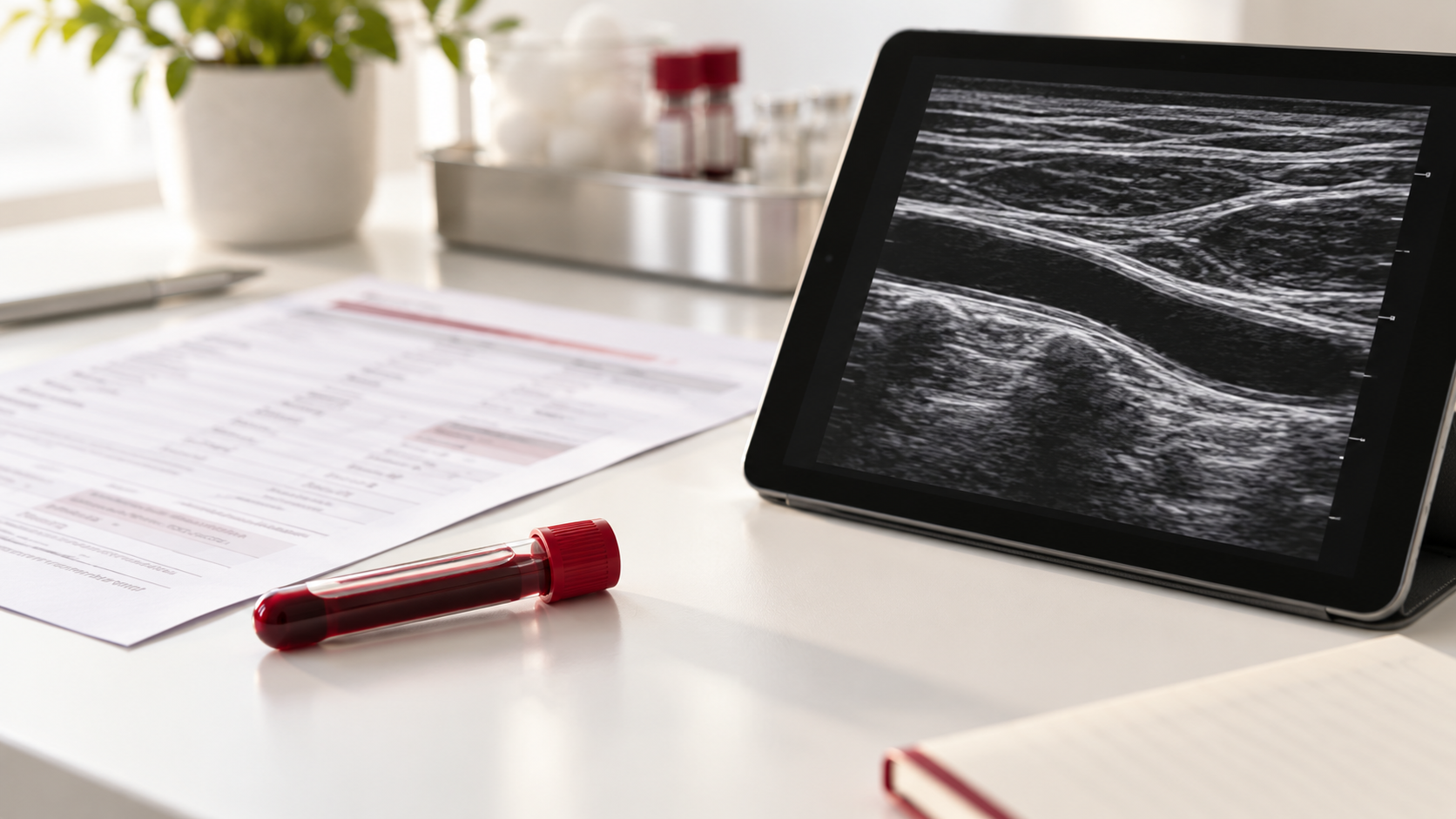
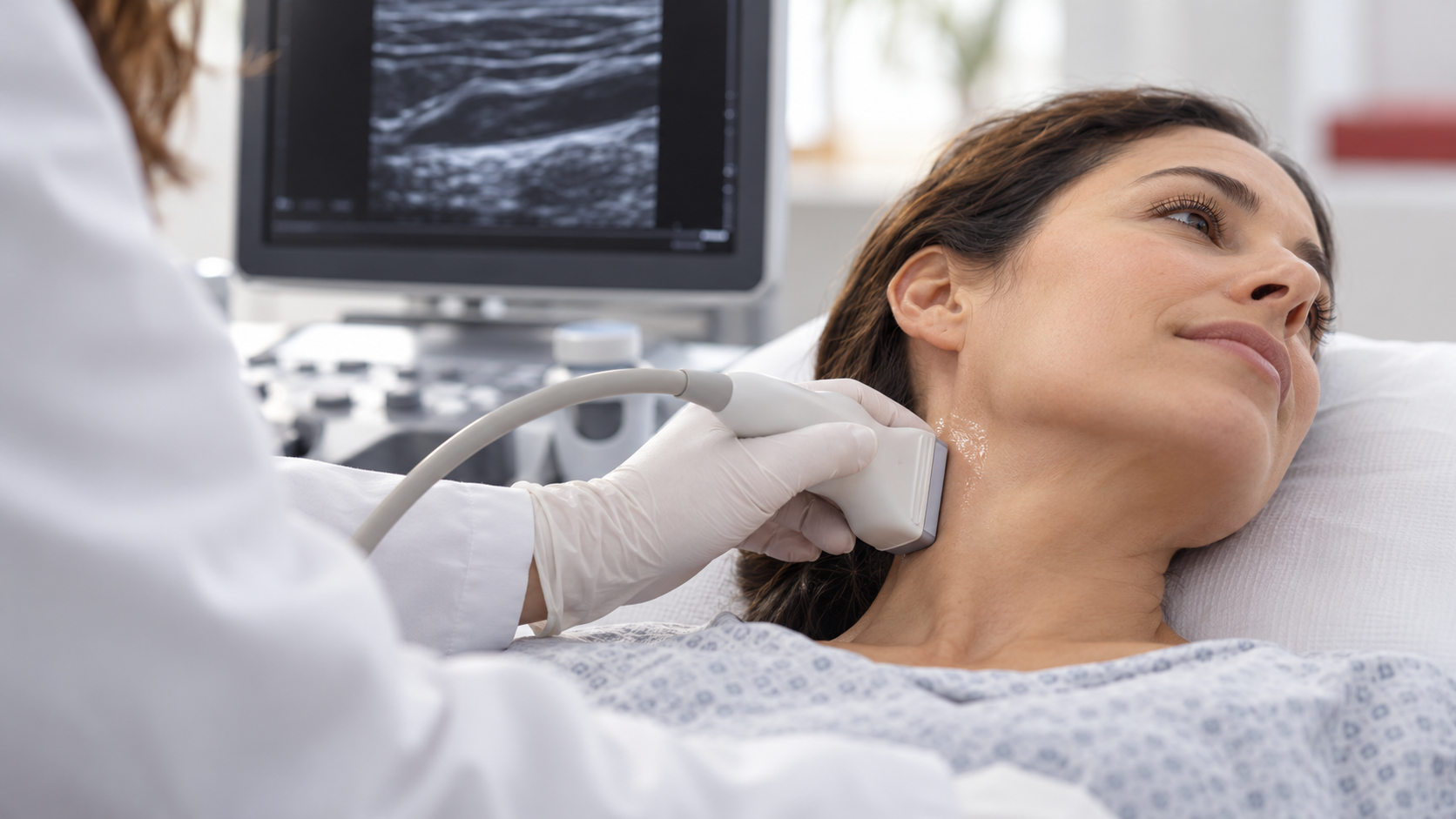
Carotid intima-media thickness, or IMT, is a measurement of the thickness of the inner two layers of the artery wall, taken with ultrasound.
The scan:
Uses sound waves
Involves no radiation
Requires no needles or contrast dye
A carotid ultrasound can also assess whether plaque is visible in the areas examined. IMT measurement and plaque assessment are related but distinct findings.
In research settings, carotid IMT and plaque findings have been studied as markers of atherosclerosis, the gradual buildup of fatty deposits in artery walls.
Why Seeing Can Change the Conversation
For many people, a number on a lab report feels abstract. An image of your own artery can make the topic more concrete.
A visual result can support prevention discussions about nutrition, movement, sleep, stress, and, where appropriate, medication.
Imaging can also add context. A clinician may consider a scan result alongside family history, blood pressure, lipid levels, and other factors when evaluating the overall picture.
It is one piece of information, not a verdict.
What Imaging Cannot Do
It is important to be realistic about what a scan can tell you.
A carotid ultrasound cannot determine your heart attack risk on its own or predict the future. A scan showing no visible plaque does not guarantee lifelong protection. Likewise, a scan showing thickening or plaque does not mean a cardiovascular event is about to happen.
Results need to be interpreted by a qualified clinician in the context of your whole health profile.
The carotid arteries are also only one part of the vascular system. They offer an accessible view of certain arteries, rather than a complete map of every artery in the body.
Who Might Want to Ask About It?
People sometimes discuss arterial imaging with their healthcare provider when they:
Have a family history of cardiovascular disease and want more information
Have borderline blood markers and are weighing next steps
Want to understand whether imaging could help inform their prevention efforts
Clinicians may also explore imaging as a tool to support patient education and shared decision making.
Whether imaging makes sense for you is a decision best made with your healthcare provider.
Putting It Together: A Fuller Prevention Picture
Blood tests, blood pressure monitoring, lifestyle habits, family history, and imaging each contribute a different piece of information.
Together, they can support a more informed, personalized conversation about long term cardiovascular health. Arterial imaging adds context to that conversation while blood tests and other established assessments remain essential.
That is also the spirit behind the discussions on Joe Ence’s podcast, Legends of Longevity: healthy aging is built on small, informed, consistent decisions made early.

Take the Next Step
Curious about what a carotid IMT scan could add to your prevention picture?
Find a Vasolabs location near you, or ask your healthcare provider whether carotid ultrasound is appropriate for you.
For clinics interested in offering Vasolabs carotid IMT ultrasound, contact [email protected].
Bring your questions. Your clinician can help you decide whether to pursue imaging and what the results mean for you.
References and Further Reading
American College of Radiology and Radiological Society of North America.Carotid Artery Screening. RadiologyInfo.org.
Explains carotid IMT, plaque assessment, and how ultrasound works.
Read the overviewAmerican College of Cardiology and American Heart Association.2019 Guideline on the Primary Prevention of Cardiovascular Disease.
Provides context for cardiovascular risk assessment, lifestyle habits, and shared decision making.
Read the guidelineInaba Y, Chen JA, Bergmann SR.Carotid plaque, compared with carotid intima-media thickness, more accurately predicts coronary artery disease events: a meta-analysis. Atherosclerosis. 2012;220(1):128–133.
Explores the distinction between plaque assessment and IMT measurement.
Read the studyNäslund U, et al.Visualization of asymptomatic atherosclerotic disease for optimum cardiovascular prevention (VIPVIZA): a pragmatic, open-label, randomised controlled trial. The Lancet. 2019.
Examines how sharing visual carotid ultrasound information, together with follow-up support, can improve prevention efforts.
Read the studyAmerican College of Cardiology and American Heart Association.2013 Guideline on the Assessment of Cardiovascular Risk.
Includes the recommendation against routine CIMT measurement for predicting a first cardiovascular event.
Read the guideline
