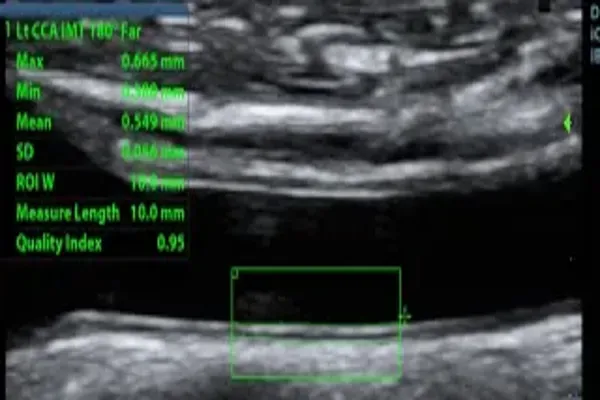
Clinical Significance of Carotid Intima-Media Thickness
The Clinical Significance of Carotid Intima-Media Thickness in Cardiovascular Health
Understanding the intricacies of cardiovascular health extends beyond surface-level evaluations. The interplay between Carotid Intima-Media Thickness (CIMT) and standard carotid ultrasounds, especially concerning cholesterol deposits, offers a comprehensive perspective.
Both CIMT and carotid ultrasound investigations focus on the carotid vessels, providing invaluable insights into potential cardiovascular risks. However, the advantage lies with CIMT, as it furnishes a robust toolset that empowers physicians to actively mitigate potential heart attacks or strokes.
Insight into IMT: IMT can be analogized to the protective lining within our arterial system. A thickening of this IMT, in conjunction with the presence of plaque, exacerbates the predisposition for cardiovascular adversities.
The Mechanism of Plaque Formation and Atherosclerosis: Resulting from elevated cholesterol levels and specific genetic predispositions, fatty particles embed within the arterial walls. When combined with a documented family history of cardiac conditions, it underscores the urgency of proactive measures.
A significant statistic to acknowledge: 12.5% of individuals do not survive their inaugural stroke, with a subsequent 25% not surpassing the first year post-event.
Assessing Cardiovascular Health with Precision: Advancements in medical technology offer a non-invasive method to detect inflammation and plaque in the crucial vessels responsible for cerebral blood flow.
Visual Diagnostic Aids: With the advent of state-of-the-art technology, clinicians can now meticulously observe and quantify Carotid IMT. Early detection and intervention of plaque formation can lead to its stabilization, which has profound implications for long-term cardiovascular outcomes.
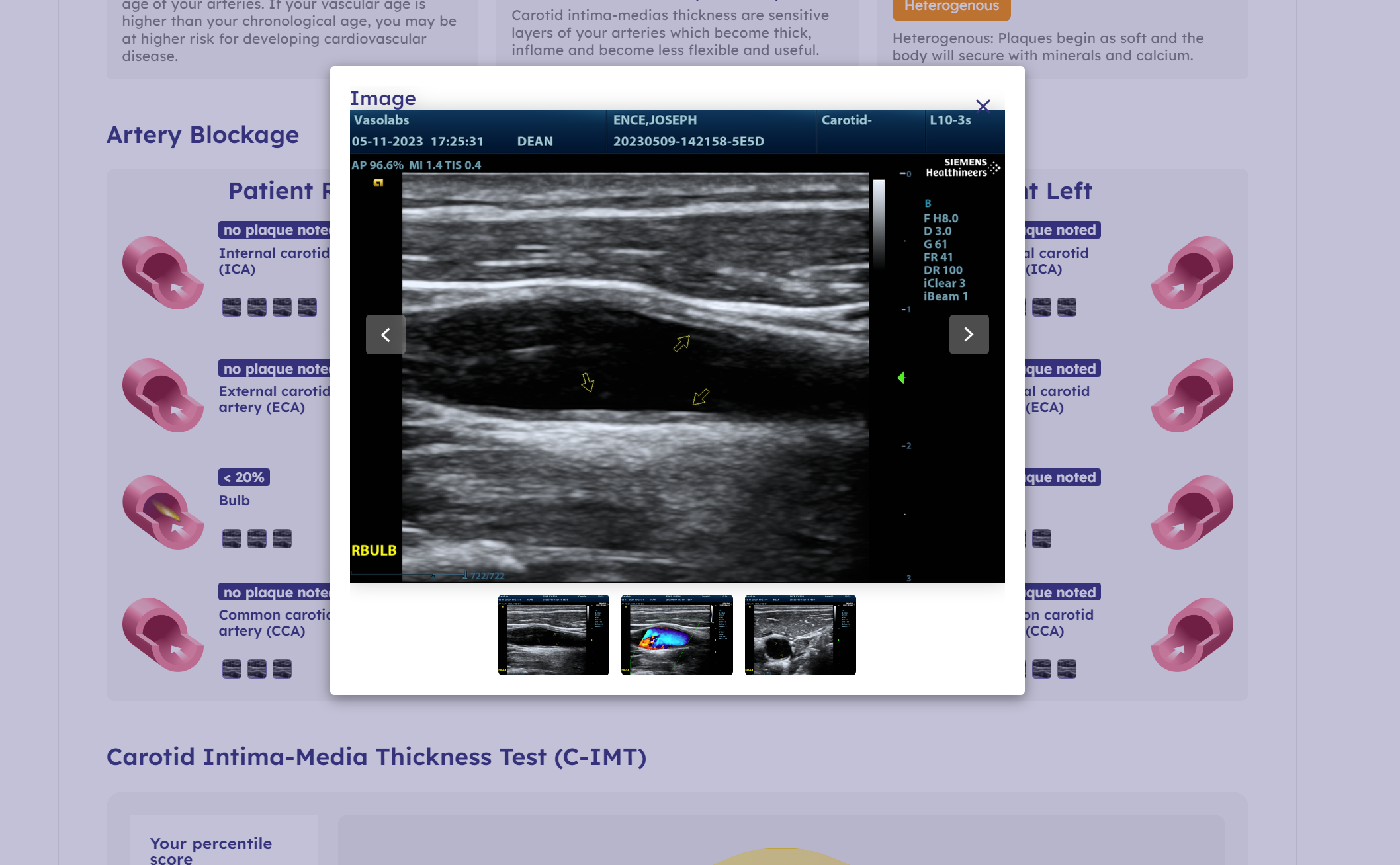
Foundational Research on Carotid IMT:
Carotid intima-media thickness and plaque in cardiovascular risk assessment - An in-depth exploration of Carotid anatomy and its clinical reporting significance.
Usefulness of Carotid Ultrasonography for Risk Stratification - Delving into how ultrasonography serves as a cornerstone in demystifying potential cardiovascular threats.
Cardiovascular risk scores in asymptomatic carotid stenosis - A study that underscores the integrative advantage of ultrasonographic parameters in cardiovascular risk assessment.
In the realm of clinical cardiology, a comprehensive approach towards understanding and mitigating potential risks remains paramount. The spotlight on Carotid IMT underscores its significance in advancing cardiovascular health outcomes.
