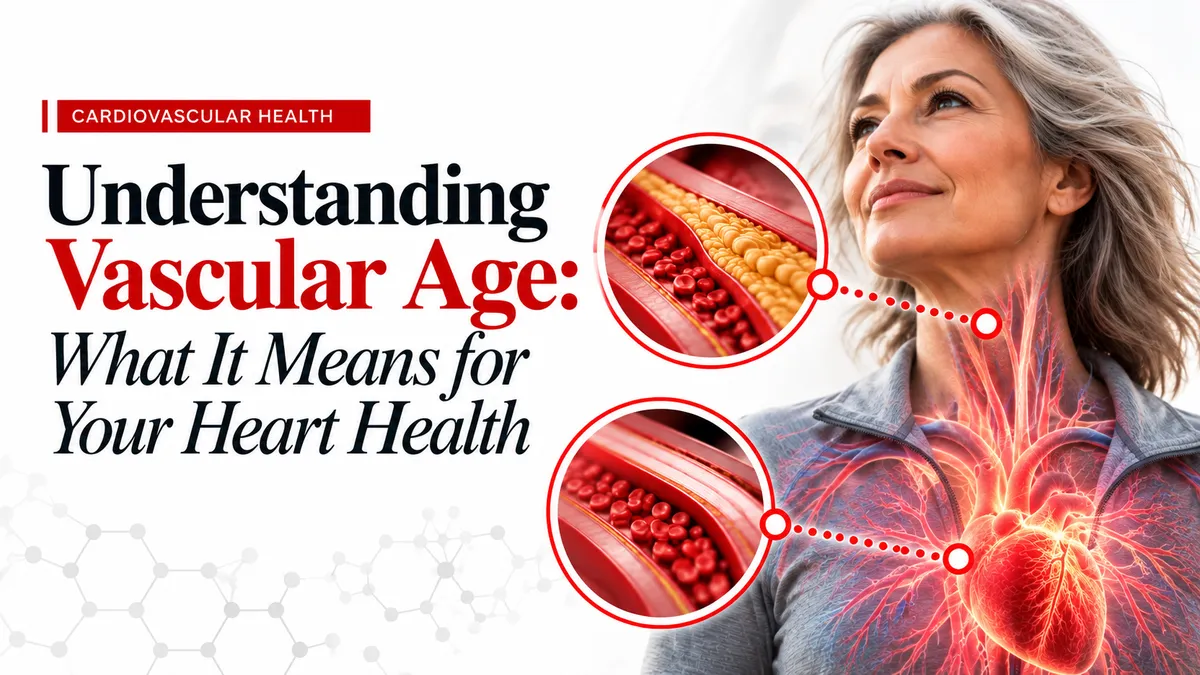
Understanding Vascular Age: What It Means for Your Heart Health
Most people know their chronological age. Fewer know their vascular age and that number often tells a much more important story about long term heart health.
Vascular age reflects the condition of your arteries. It looks at how flexible, thick, and healthy your blood vessels are compared to what’s expected at a certain age.
In simple terms: Your arteries can be younger or older than you are.
And that difference matters.
What Is Vascular Age?
Your arteries are meant to be smooth and flexible, allowing blood to flow easily to your heart, brain, and organs.
Over time, factors like poor diet, stress, inflammation, smoking, high blood sugar, and lack of exercise can damage the artery walls. This leads to thickening, stiffness, and plaque buildup.
Vascular age measures how much “wear and tear” your arteries have experienced.
If your arteries resemble those of a healthy 40 year old but you’re 55, your vascular age is 40.
If they resemble those of a 70 year old, your vascular age is 70.
The goal is simple: keep your vascular age as young as possible.
What Affects Your Vascular Age?

Several lifestyle and health factors influence how quickly arteries age:
• Diet high in sugar, processed foods, and unhealthy fats
• Chronic stress and poor sleep
• Smoking and excessive alcohol
• High blood pressure and blood sugar
• Inflammation in the body
• Lack of physical activity
The good news is that vascular aging isn’t fixed. With the right habits and early awareness, it can be slowed and even improved.
Why Vascular Age Is More Important Than Your Birth Age
Two people can both be 50 years old and have completely different heart health risks.
Someone with a vascular age of 35 likely has flexible, healthy arteries and a lower risk of heart attack and stroke.
Someone with a vascular age of 70 may already have silent artery damage even if they feel “fine.”
This is why many heart events happen to people who thought they were healthy.
Vascular age helps reveal risk early, before symptoms appear.
How Can You Find Out Your Vascular Age?
One of the most effective ways to assess vascular age is through non invasive vascular imaging, such as carotid artery ultrasound scans.
These scans look at the thickness of your artery walls and detect early plaque buildup. This data is then compared to healthy age based standards to estimate your vascular age. It’s quick, painless, and provides powerful insight into long term cardiovascular risk.
Can You Lower Your Vascular Age?
Yes and that’s the encouraging part.
Improving vascular age often involves:
• Eating whole, nutrient rich foods
• Reducing sugar and ultra processed oils
• Managing stress
• Exercising consistently (even daily walking helps)
• Supporting artery health through targeted nutrients
• Monitoring heart health regularly
Small changes, done consistently, can make a major impact over time.
The Big Picture
Your heart doesn’t care how many candles were on your last birthday cake.
It cares about the condition of your arteries.
Understanding your vascular age gives you a clearer picture of your true cardiovascular health and the opportunity to take action early, when prevention works best.
At Vasolabs, the focus is on helping people gain real insight into their artery health through advanced screening and education, so they can make informed choices for a longer, healthier life.
