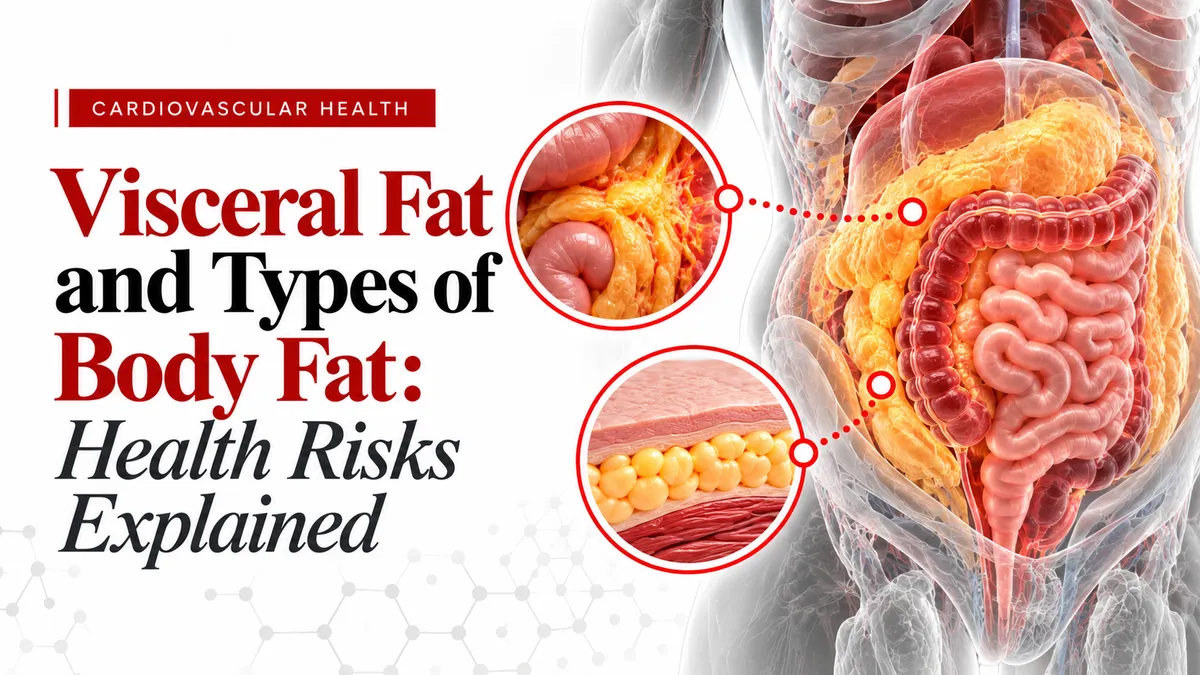
Visceral Fat and Types of Body Fat: Health Risks Explained
Visceral Fat and the Different Types of Body Fat: A Clinical Guide to Metabolic and Cardiovascular Risk
When most people think about body fat, they focus on what they see. Clinically, the fat you cannot see often carries more risk.
The body stores fat in several distinct ways, and each type behaves differently. Some play protective roles. Others actively influence inflammation, insulin resistance, vascular aging, and long term cardiovascular outcomes.
Understanding these differences helps shift the focus from weight alone toward metabolic and cardiovascular health.
Subcutaneous Fat: The Most Visible Layer

Subcutaneous fat sits directly under the skin and is the type most people recognize. It is commonly found around the abdomen, hips, thighs, and arms.
From a physiological standpoint, subcutaneous fat serves several functions. It stores energy, helps regulate temperature, and contributes to hormone signaling. Compared with deeper fat stores, it is generally less strongly associated with cardiometabolic disease.¹
Real world example
Many active individuals carry some subcutaneous fat while maintaining normal glucose, lipid, and blood pressure levels because their deeper fat stores remain low.
Visceral Fat: The Most Clinically Relevant

Visceral fat is stored deep in the abdominal cavity, surrounding organs such as the liver, pancreas, and intestines. Unlike subcutaneous fat, it behaves as a metabolically active endocrine tissue.
Research shows visceral fat releases inflammatory cytokines and bioactive compounds that contribute to insulin resistance, dyslipidemia, and systemic inflammation.² These pathways help explain its strong association with metabolic syndrome, cardiovascular disease, and fatty liver disease.
Real world example
A patient with a normal body mass index but elevated triglycerides and fasting glucose often shows increased visceral fat on imaging.
Intramuscular Fat: The Overlooked Contributor

Intramuscular fat accumulates within muscle tissue. It is more common with aging, inactivity, and prolonged sedentary behavior.
Studies show higher intramuscular fat is linked to reduced insulin sensitivity and decreased physical performance.³ Over time, it contributes to metabolic decline even in the absence of significant weight gain.
Real world example
Someone who works long hours at a desk and avoids resistance training may gradually lose strength while metabolic markers worsen despite stable body weight.
Ectopic Fat: Fat Stored in Organs

Ectopic fat refers to fat deposited in organs where it is not typically stored, including the liver, pancreas, heart, and blood vessels.
These deposits are strongly linked to systemic inflammation, insulin resistance, and cardiovascular risk. Nonalcoholic fatty liver disease, for example, is now one of the most common metabolic conditions worldwide.⁴
Real world example
Many individuals learn they have fatty liver during routine bloodwork or imaging despite no symptoms and minimal alcohol intake.
Why Visceral Fat Matters in Cardiovascular Health
Visceral fat plays a central role in cardiometabolic risk because it directly affects glucose metabolism, lipid regulation, inflammation, and vascular function.
Higher visceral fat levels are associated with early arterial changes and increased cardiovascular events, independent of total body weight.⁵ From a preventive cardiology perspective, reducing visceral fat often leads to meaningful improvements in metabolic markers.
What Drives Visceral Fat Accumulation
Visceral fat accumulation typically reflects long term metabolic patterns rather than short term changes. Key drivers include:
• Chronic stress and elevated cortisol
• Poor sleep quality and circadian disruption
• Diets high in refined carbohydrates and ultra processed foods
• Sedentary behavior
• Insulin resistance
Real world example
A professional with irregular sleep, frequent travel, and limited physical activity often develops increased abdominal circumference and rising metabolic risk markers over time.
The Encouraging Reality: It Responds to Change
Among all fat depots, visceral fat responds quickly to consistent lifestyle improvements. Research shows measurable reductions with:
• Regular aerobic and resistance training⁶
• Improved sleep patterns
• Higher protein and fiber intake
• Weight stabilization and metabolic regulation
Even moderate lifestyle changes can significantly improve cardiometabolic outcomes.
Conclusion
Not all fat behaves the same way.
Subcutaneous fat is visible but often less harmful, while visceral and ectopic fat are more closely tied to long term metabolic and cardiovascular risk.
For clinicians and patients alike, the focus should move beyond weight alone toward improving metabolic function, reducing inflammation, and supporting vascular health through sustainable habits.
References
Ibrahim MM. Subcutaneous and visceral adipose tissue: structural and functional differences. Obesity Reviews. 2010.
Després JP. Body fat distribution and risk of cardiovascular disease. Circulation. 2012.
Goodpaster BH, et al. Skeletal muscle lipid content and insulin resistance. PNAS. 2001.
Younossi ZM, et al. Global epidemiology of NAFLD. Hepatology. 2016.
Britton KA, Fox CS. Ectopic fat depots and cardiovascular disease risk. Circulation. 2011.
Ross R, et al. Effects of exercise on abdominal obesity and visceral fat. Obesity. 2004.
