801-797-2297
1414 South 600 West, Bountiful, UT 84010
Mon-Friday, 8am-5pm
801-797-2297 | Mon-Friday, 8am-5pm

Welcome to Our Blog: Vasolabs News and Education
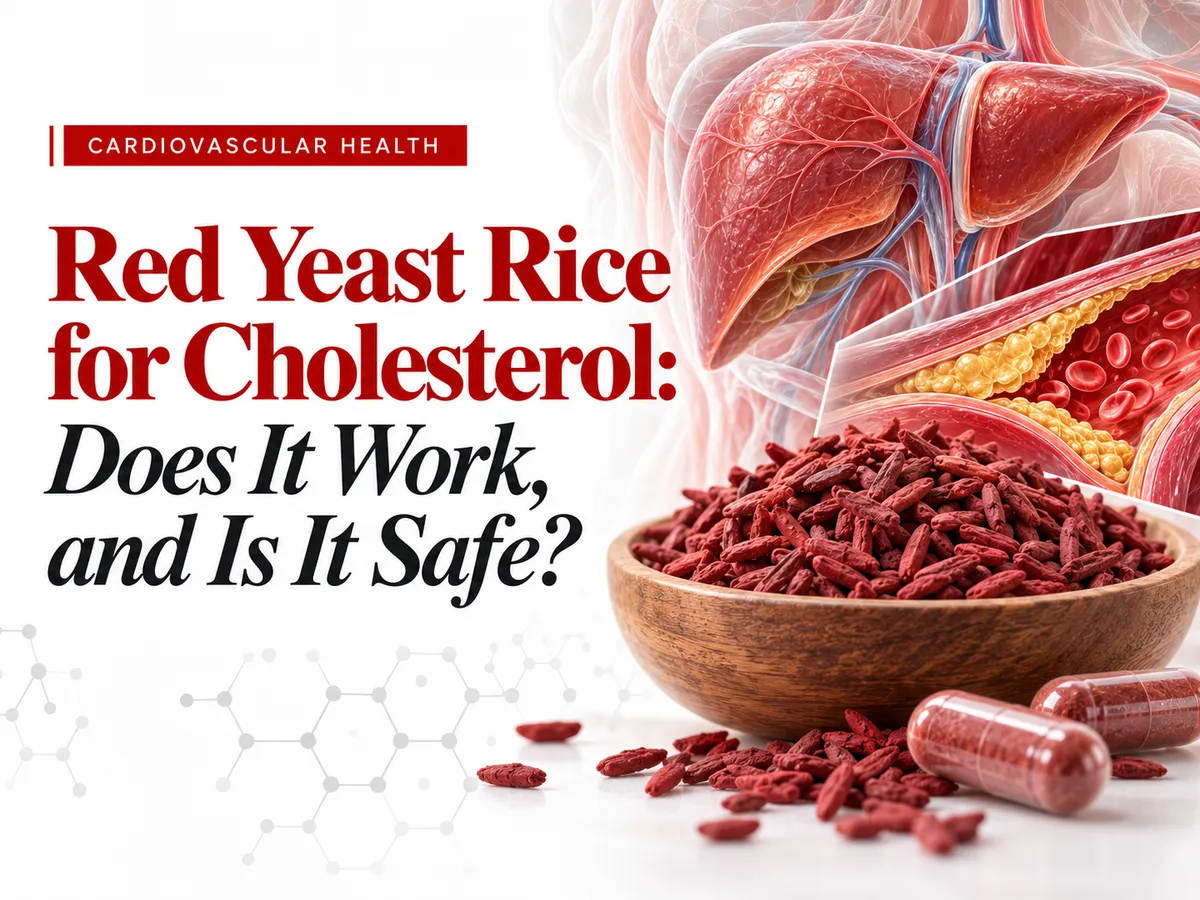
Red Yeast Rice for Cholesterol: Does It Work, and Is It Safe?
Vasolabs | Red Yeast Rice for Cholesterol: Does It Work, and Is It Safe?
What the research says about red yeast rice supplements, their potential to lower LDL cholesterol, and the safety concerns worth understanding.
If your cholesterol levels are higher than you'd like, you may have considered trying a natural supplement before starting prescription medication.
Red yeast rice is one of the more popular options for cholesterol management. It has been used for centuries in traditional Chinese medicine, and modern research suggests it can help lower LDL cholesterol.
But there's something important to understand: the same compound that makes red yeast rice effective also gives it some of the same risks as prescription statins.
So, how well does it actually work? Is it safe? And can it replace a statin?
Let's look at what the research tells us.
What Is Red Yeast Rice?
Red yeast rice (RYR) is made by fermenting rice with a type of yeast called Monascus purpureus. This process gives the rice its distinctive red color and produces naturally occurring compounds called monacolins.
One of these compounds, monacolin K, is particularly important because of its cholesterol lowering properties.
Interestingly, monacolin K is chemically identical to lovastatin, a prescription medication used to lower cholesterol.
This explains why red yeast rice can have measurable effects on cholesterol levels. It also explains why it should be approached with the same care as other cholesterol lowering treatments.
How Does Red Yeast Rice Lower Cholesterol?
Your liver naturally produces cholesterol through a process involving an enzyme called HMG-CoA reductase.
Monacolin K inhibits this enzyme, reducing the amount of cholesterol your liver produces.
As a result, the liver can remove more LDL cholesterol from the bloodstream.
This is essentially the same mechanism used by prescription statins.
What Does the Research Say?
A 2019 review published in the Methodist DeBakey Cardiovascular Journal examined the cholesterol lowering effects of red yeast rice.
Researchers reported that daily supplementation with monacolin K was associated with an approximately 15% to 25% reduction in LDL cholesterol within 6 to 8 weeks.
The review also discussed potential improvements in other cardiovascular markers, including:
Total cholesterol
Non-HDL cholesterol
Apolipoprotein B (ApoB)
High sensitivity C-reactive protein (hs-CRP)
Pulse wave velocity
Endothelial function
These findings suggest that some red yeast rice preparations can meaningfully influence cholesterol levels.
However, these results do not mean every red yeast rice supplement will produce the same effects. The amount of active monacolin K can differ significantly between products.
The review's favorable conclusions also need to be considered alongside broader safety evidence and the limitations of the studies it examined.
Red Yeast Rice vs. Prescription Statins
Since red yeast rice contains a compound identical to lovastatin, it's reasonable to wonder whether it can replace prescription cholesterol medication.
The answer depends on your cardiovascular risk, medical history, and treatment goals.
Red Yeast Rice
Red yeast rice products containing meaningful amounts of monacolin K have been associated with LDL cholesterol reductions of approximately 15% to 25% in some studies.
However, supplements can vary widely in their active ingredient content, and their long term safety and effectiveness are less certain.
Prescription Statins
Prescription statins contain standardized doses of active medication and have been studied extensively.
Large clinical trials have demonstrated that appropriate statin therapy can reduce the risk of heart attacks, strokes, and other cardiovascular events.
Lifestyle Changes
Healthy eating, regular physical activity, weight management, and smoking cessation remain important foundations of cardiovascular prevention.
For some individuals, lifestyle changes may substantially improve cholesterol levels. Others may still need medication.
The important distinction is that lowering LDL cholesterol and demonstrating a reduction in cardiovascular events are not exactly the same thing.
Is Red Yeast Rice Safe?
The word "natural" often creates the impression that a supplement is automatically safer than medication.
That isn't necessarily true.
Because red yeast rice may contain monacolin K, it can produce effects and side effects similar to those of lovastatin.
1. Muscle Pain and Weakness
Some people taking red yeast rice may experience muscle aches, tenderness, or weakness.
In rare cases, serious muscle injury can occur.
Severe muscle pain, unusual weakness, or dark urine should prompt immediate medical attention.
2. Liver Concerns
Monacolin K can affect liver enzymes, particularly in people with existing liver conditions or those taking other medications that affect liver function.
A healthcare provider may recommend monitoring liver enzymes depending on individual risk.
3. Inconsistent Supplement Quality
One of the biggest challenges with red yeast rice is product consistency.
The amount of monacolin K can vary considerably between brands and products.
Some supplements may contain little active monacolin K, while others may contain pharmacologically significant amounts.
As a result, the effects of one red yeast rice supplement cannot automatically be assumed to apply to another.
4. Citrinin Contamination
Red yeast rice products may also contain citrinin, a potentially harmful substance produced during certain fermentation processes.
Citrinin can damage the kidneys.
Independent product testing for citrinin and monacolin content may help identify quality concerns, although testing does not guarantee that a supplement is safe or appropriate for everyone.
Who Should Avoid Red Yeast Rice?
Red yeast rice may not be appropriate for everyone.
Extra caution is particularly important for:
Pregnant or breastfeeding individuals
People already taking prescription statins
Individuals with liver disease
People with a history of statin related muscle problems
Individuals taking medications that interact with lovastatin
People with significant cardiovascular risk who require proven medical treatment
Some antibiotics, antifungal medications, and other drugs may interact with monacolin K.
Grapefruit can also affect how lovastatin is metabolized.
Always discuss potential interactions with your healthcare provider or pharmacist before taking red yeast rice.
Can Red Yeast Rice Prevent Heart Attacks?
Lowering cholesterol is an important part of cardiovascular prevention, but it is not the only factor involved.
Research has shown that certain red yeast rice preparations can lower LDL cholesterol.
However, the evidence for preventing heart attacks and strokes is more limited and less generalizable than the extensive clinical evidence supporting prescription statins.
Some studies involving specific standardized red yeast rice preparations have reported cardiovascular benefits, but those findings should not be assumed to apply to every commercially available supplement.
There are also important questions about long term safety, dosing consistency, and product quality.
For individuals with established cardiovascular disease or elevated cardiovascular risk, red yeast rice should not be considered an automatic replacement for evidence based treatment.
Why Cholesterol Is Only Part of the Cardiovascular Picture
Cholesterol measurements provide valuable information about cardiovascular risk.
However, they do not directly show whether plaque is present in the arteries.
Two people with similar cholesterol levels may have different degrees of atherosclerosis.
This is one reason clinicians sometimes consider additional information when evaluating cardiovascular health.
At Vasolabs, we focus on carotid ultrasound imaging, including carotid intima media thickness (CIMT) measurements and plaque assessment.
These ultrasound findings can provide information about the structure of the carotid arteries.
CIMT measures the thickness of specific layers of the arterial wall, while plaque assessment looks for localized areas of atherosclerotic buildup.
These are different findings, and each has limitations in clinical interpretation.
Carotid ultrasound does not replace cholesterol testing, medical evaluation, or other recommended cardiovascular assessments. Its usefulness depends on the individual patient and the clinical question being considered.
Understanding both blood based risk factors and relevant imaging findings may help support more informed conversations about cardiovascular prevention.
What About Bergamot Extract?
Bergamot is another supplement sometimes discussed for cholesterol management.
A 2016 study by Toth and colleagues evaluated a bergamot extract in adults with moderately elevated cholesterol.
The researchers reported improvements in several lipid measurements.
However, bergamot and red yeast rice are different supplements with different active compounds.
Results from bergamot studies should not be used as evidence for the safety or effectiveness of red yeast rice.
Both require additional research, particularly regarding long term cardiovascular outcomes.
Healthy Habits Still Matter
Whether someone uses supplements, prescription medications, or a combination of treatments, daily habits remain important.
Cardiovascular prevention generally includes:
Choosing a dietary pattern rich in vegetables, fruits, whole grains, legumes, and unsaturated fats
Limiting saturated fat intake
Getting at least 150 minutes of moderate intensity physical activity each week
Maintaining a healthy weight
Avoiding smoking
Managing blood pressure and blood glucose
Following an individualized cholesterol management plan
Supplements should never be viewed as a substitute for these foundational measures.
Frequently Asked Questions
How long does red yeast rice take to lower cholesterol?
Research reviewed in 2019 reported LDL cholesterol reductions within approximately 6 to 8 weeks when effective amounts of monacolin K were consumed daily.
Individual responses vary, and commercial products may not contain the same amounts used in clinical studies.
Is red yeast rice the same as a statin?
Not exactly.
Red yeast rice is a fermented rice product that may contain several compounds, including monacolin K.
Monacolin K is chemically identical to the prescription statin lovastatin.
This means red yeast rice products containing monacolin K may have similar cholesterol lowering effects, side effects, and medication interactions.
Can I take red yeast rice with my statin medication?
Combining red yeast rice with prescription statins is generally not recommended without medical supervision.
Both may act through the same biological pathway, potentially increasing the risk of adverse effects.
Does red yeast rice lower LDL naturally?
Red yeast rice is produced through fermentation, but its active cholesterol lowering compound acts in the same way as a prescription medication.
Being naturally derived does not automatically make it safer.
Are all red yeast rice supplements equally effective?
No.
Products can differ greatly in monacolin K content, manufacturing quality, and contamination risk.
The results reported in clinical studies may not apply to products sold in stores or online.
Should I use red yeast rice instead of a prescription statin?
That decision should be made with a qualified healthcare professional.
Your LDL level, overall cardiovascular risk, existing medical conditions, current medications, and treatment goals all matter.
The Bottom Line
Red yeast rice is more than just another supplement marketed for cholesterol management.
It contains compounds that can significantly affect cholesterol production, and research suggests that preparations containing monacolin K may reduce LDL cholesterol by approximately 15% to 25%.
However, the same compound responsible for these benefits can also produce statin related side effects.
Variable product quality, possible citrinin contamination, medication interactions, and limited long term evidence are important considerations.
For anyone exploring cholesterol management options, the most useful starting point is a discussion with a healthcare professional about overall cardiovascular risk and the treatments supported by evidence.
The goal isn't simply to improve a cholesterol number. It's to make informed decisions that support long term cardiovascular health.
Keep Learning With Vasolabs
Cholesterol is an important part of cardiovascular health, but it is only one piece of the larger picture.
At Vasolabs, we help clinicians and individuals better understand carotid artery structure through CIMT ultrasound measurements and plaque assessment.
Interested in learning more about carotid ultrasound or finding a participating provider?
Visit: https://vasolabs.com/locations
Website: https://www.vasolabs.com
Contact: [email protected]
For more conversations about cardiovascular prevention, emerging research, and longevity, explore Legends of Longevity, hosted by Joseph Ence.
Medical Disclaimer
This article is intended for general educational purposes only and does not constitute medical advice, diagnosis, or treatment.
Red yeast rice supplements may interact with prescription medications and may not be appropriate for certain individuals. Consult a qualified healthcare professional before starting, stopping, or changing any supplement or medication.
CIMT and carotid plaque imaging findings must be interpreted in the context of an individual's overall clinical assessment. The information provided here should not replace professional medical guidance.
References
Cicero AFG, Fogacci F, Banach M. Red Yeast Rice for Hypercholesterolemia. Methodist DeBakey Cardiovascular Journal. 2019;15(3).
Toth PP, Patti AM, Nikolic D, et al. Bergamot Reduces Plasma Lipids, Atherogenic Small Dense LDL, and Subclinical Atherosclerosis in Subjects with Moderate Hypercholesterolemia: A 6 Months Prospective Study. Frontiers in Pharmacology. 2016;6:299. https://doi.org/10.3389/fphar.2015.00299
Grundy SM, et al. 2018 AHA/ACC Guideline on the Management of Blood Cholesterol. Circulation. 2019;139(25)–e1143.
National Center for Complementary and Integrative Health (NCCIH). Red Yeast Rice. https://www.nccih.nih.gov/health/red-yeast-rice

Why should you get this C-IMT scan?
Informed patients make better decisions.

Early Detection of Heart Disease Risk
A C-IMT scan can act as an early warning system by identifying increased thickness in the artery walls long before any symptoms of heart disease or stroke become evident.

Personalized Treatment Plan
The results of a C-IMT scan can help your doctor tailor a treatment plan to reduce your risk of heart attack or stroke, which is the leading cause of death and disability in the world.

Non-Invasive and Safe
Unlike some other tests, the C-IMT scan is non-invasive and uses ultrasound, not radiation. It's safe and doesn't require any special preparation.

Family History
If you have a family history of early heart disease or stroke, the scan can provide valuable information about your own risk, helping you and your doctor to take preventive measures.

Peace of Mind
If you are anxious about your cardiovascular health, a vasometric scan can provide reassurance if your results are within a normal range.
Vasolabs Is A Premier Provider Of Safe, Convenient Heart Disease Screenings.
Vasolabs Is A Premier Provider Of Safe, Convenient Heart Disease Screenings.
Uses the newest ultrasound technology
Determines whether or not you have heart disease
Pain-free. Requires no wires, treadmills, or needles.
Takes only 15 minutes
Get your Easy-to-Understand Report within 24 hours
Optional Discussion with your Clinician
Schedule a test to see if you’re at risk of heart disease!
Identify Your Risks of Getting Cardiovascular Disease With a Simple C-IMT Scan!
Know if You Are at Risk for Heart Attacks, Strokes, and other Cardiovascular Diseases:
$499 $249
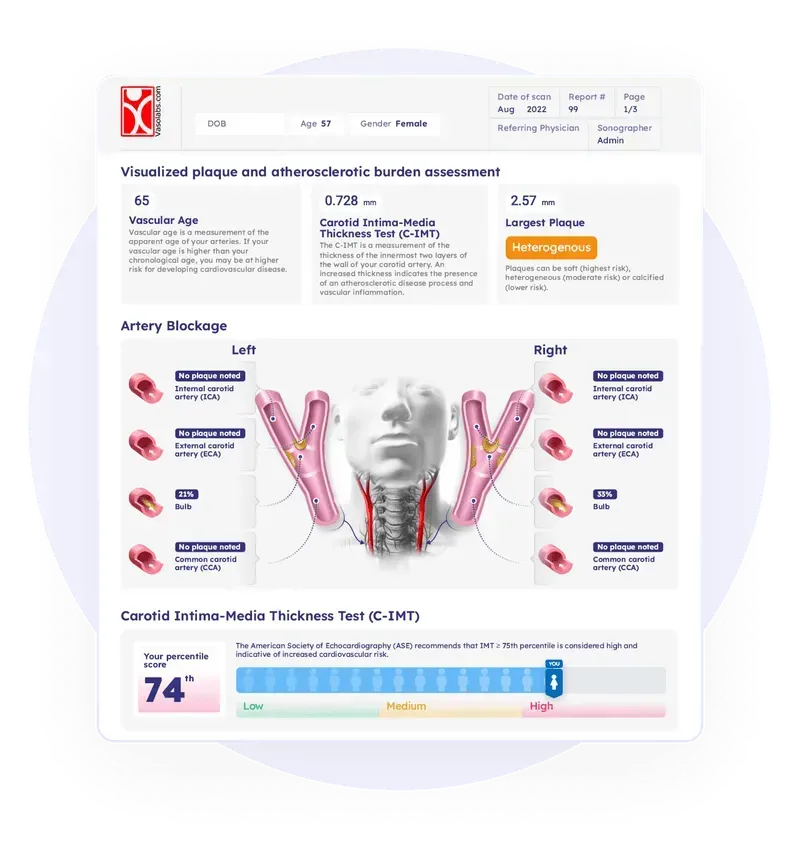
What's Included in your Report:
See your Vascular Age!
Soft or Calcified Plaque is visualized, you’ll see it all.
Track Your inflammation, Know your Artery Blockage.
Informed patients make better decisions.
Loved ones depend on you.
Do I Need a Heart Screening?
Here is a checklist of factors that put you at elevated risk for heart attack, stroke, and other forms of cardiovascular disease:
Over 40 years of age
Family history of heart disease/stroke
Overweight
Increased cholesterol level
High-fat diet
Tobacco user
High blood pressure
Diabetic
Metabolic syndrome
Erectile dysfunction
Psoriasis
Peace of Mind is Priceless

Looking back, it's chilling to realize how close I came to the edge. I opted for a test at Vasolabs on a whim, without any particular symptoms. Boy, am I glad I did! Turns out, my arteries were nearly clogged up - something regular doctors wouldn't have caught unless there were signs of a problem. By the time I got a couple of second opinions and returned to my regular doctor, my arteries were 95% blocked. If I hadn't taken the test when I did, I could have had a stroke. Trust me when I say this, going to Vasolabs was one of the best decisions I've ever made.
- George B
I was really worried about getting a heart attack because its already happened in our family. So taking this test gave me the peace of mind I was looking for. And it was so cool to see the age of my artery was younger than I was!!
- Barbara L.
I went to Vasolabs for their C-IMT testing, thinking it'd be a complicated deal, but nope! It was as easy as getting a photo taken. And guess what? They found an issue that could've been a silent threat. Thanks to them catching it early, my doctor and I are on top of it now. Honestly, I feel like I dodged a bullet. Big thumbs up for Vasolabs!
- Walter S.
I saw an ad on Facebook and I got the C-IMT Test for myself and my husband, it was such an easy process. And a great gift idea for family. It was really fun to look at the results and good to know I need to work on my health.
- Jessica F.
Frequently Asked Question
What is a C-IMT scan?
A C-IMT Scan is a non-invasive procedure that uses ultrasound technology to measure the thickness of your carotid arteries' walls. These arteries, located on each side of your neck, supply blood to your brain. Over time, plaque can build up in these arteries, causing them to thicken. This is often an early sign of atherosclerosis, a disease that can lead to serious conditions such as heart attacks and strokes.
Where do I go to get this scan?
For your quick, 15-minute appointment, simply head over to our facility located at 1414 South 600 West, Bountiful, UT 84010.
Who takes my test?
Dean Ence, an expert sonographer, will be handling your fast, no-pain test to figure out the 'age' of your arteries. This test checks how thick your artery walls are - thicker walls can mean inflammation. It's all simplified for you to understand easily. We also spot and show plaque, whether soft or hard, in your arteries. You get detailed pictures from the ultrasound for your records. Taking care of your health is our main goal!
How long does the C-IMT Scan and Report take?
The duration of the C-IMT scan can vary depending on various factors, like the complexity of the patient's condition. Typically, a Vasometric scan takes around 15 minutes to complete. The report is done and delivered within 24 hours to you.
Will my insurance cover this C-IMT Scan?
No. Hospitals charge $800, but our cost is $249.
Our Mission:
Vasolabs is dedicated to promoting heart health by providing innovative, easy-to-access tests. We empower people with insights into their vascular health for early risk detection.
Our Vision:
To redefine cardiovascular care by shifting the focus from late-stage disease management to proactive prevention.


