801-797-2297
1414 South 600 West, Bountiful, UT 84010
Mon-Friday, 8am-5pm
801-797-2297 | Mon-Friday, 8am-5pm

Welcome to Our Blog: Vasolabs News and Education
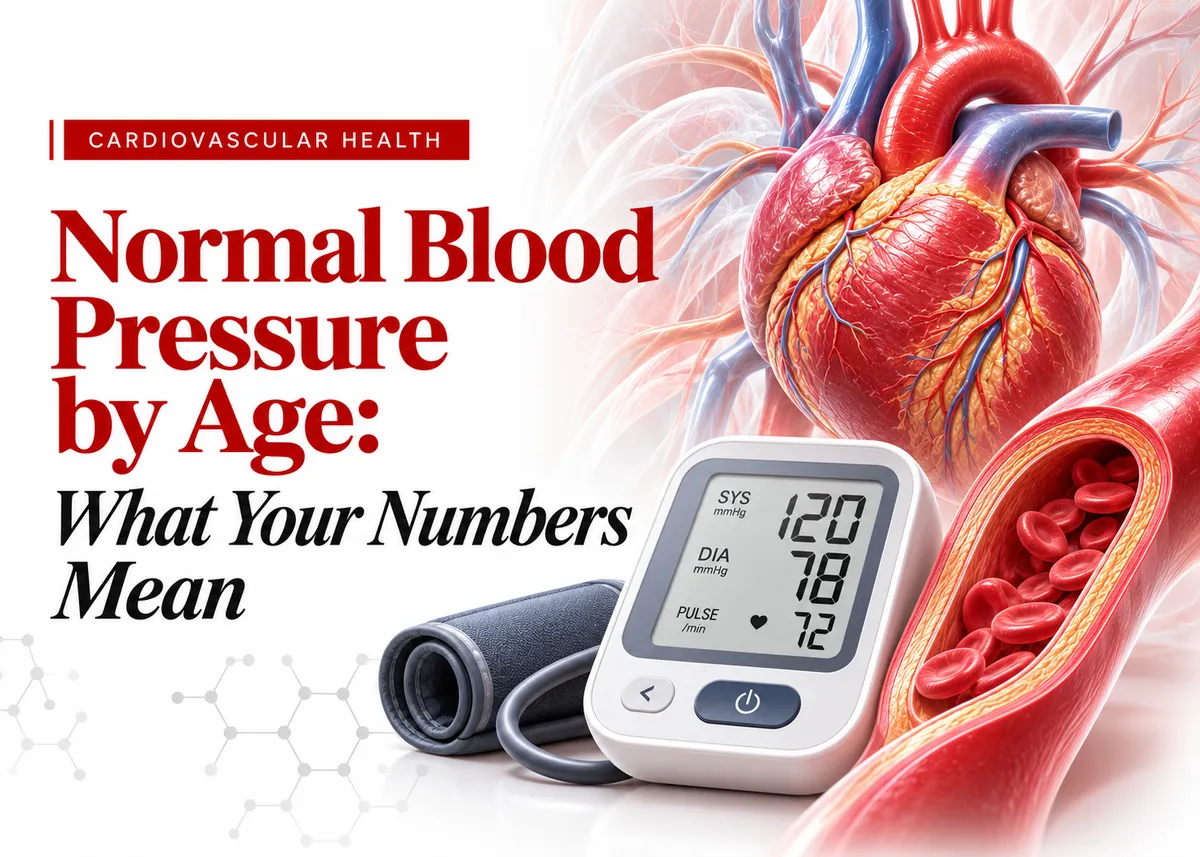
Normal Blood Pressure by Age: Chart & Guide for Adults
Vasolabs | What Is Normal Blood Pressure by Age? Understanding Your Numbers
Why blood pressure changes as we get older and what your readings really mean for your heart health.
Have you ever checked your blood pressure and wondered whether your numbers are normal for your age?
Maybe you were told that higher blood pressure is simply part of getting older. While blood pressure does tend to increase with age, that doesn't necessarily mean higher readings are healthy.
For adults, normal blood pressure is generally considered below 120/80 mmHg, regardless of age. However, understanding what those numbers mean, how they change over time, and when to speak with your healthcare provider can help you make better decisions about your cardiovascular health.
Let's take a closer look.
Understanding Your Blood Pressure Numbers
Blood pressure measures the force of blood pushing against the walls of your arteries as your heart pumps blood throughout your body.
It's expressed using two numbers:
Systolic Blood Pressure (Top Number)
This measures the pressure inside your arteries when your heart beats and pumps blood.
Diastolic Blood Pressure (Bottom Number)
This measures the pressure inside your arteries when your heart relaxes between beats.
For example, a reading of 118/76 mmHg means your systolic pressure is 118 and your diastolic pressure is 76.
Both numbers matter because they provide valuable information about how your cardiovascular system is functioning.
What Is Considered Normal Blood Pressure?
According to the American College of Cardiology (ACC) and American Heart Association (AHA) blood pressure classification system, adult blood pressure falls into four main categories.
Category | Systolic | Diastolic |
|---|---|---|
Normal | Below 120 | Below 80 |
Elevated | 120–129 | Below 80 |
Stage 1 Hypertension | 130–139 | Or 80–89 |
Stage 2 Hypertension | 140 or higher | Or 90 or higher |
For normal and elevated blood pressure, both listed conditions must be met. For hypertension, either number can place a reading in a higher category.
These categories apply to adults across different age groups.
A blood pressure reading of 135/85, for example, falls under Stage 1 hypertension whether someone is 35 or 65 years old.
Although elevated blood pressure becomes increasingly common with age, it shouldn't automatically be considered normal.
Important: Blood pressure above 180 systolic and/or 120 diastolic may represent a hypertensive crisis. Repeat the measurement after at least one minute and seek immediate medical guidance if it remains that high. If you experience chest pain, difficulty breathing, weakness, vision changes, or other concerning symptoms, seek emergency medical care.
Normal Blood Pressure by Age: What Changes Over Time?
Your blood pressure can change throughout your life.
As we grow older, our arteries naturally undergo structural changes. They may become stiffer and less flexible, which can increase the pressure needed to move blood through the circulatory system.
Here's what generally happens across different stages of adulthood.
Ages 18–39: Young Adults
Many younger adults have blood pressure readings within the normal range.
However, high blood pressure can still develop during early adulthood, particularly in people with certain lifestyle habits, genetic predispositions, or underlying health conditions.
Because hypertension often develops without noticeable symptoms, routine monitoring is important even at a younger age.
General healthy reference: Below 120/80 mmHg.
Ages 40–59: Middle Adulthood
During middle age, blood pressure tends to increase.
This may be influenced by changes in arterial elasticity, body weight, physical activity, stress, and other cardiovascular risk factors.
For many people, this is also the stage of life when high blood pressure is first diagnosed.
Regular blood pressure checks, cardiovascular risk assessments, and healthy lifestyle habits become increasingly important.
General healthy reference: Below 120/80 mmHg.
Ages 60 and Older: Older Adults
High blood pressure becomes particularly common after age 60.
As arteries become less flexible, systolic blood pressure often rises while diastolic pressure may remain stable or even decrease.
This can create a wider difference between the top and bottom blood pressure numbers, known as pulse pressure.
Although higher readings are common in older adults, they can still increase the risk of cardiovascular complications.
Healthcare providers may recommend individualized treatment goals based on overall health, medications, frailty, and other medical conditions.
General healthy reference: Below 120/80 mmHg, with individualized treatment targets when necessary.
Is Higher Blood Pressure Normal as You Age?
It's a common belief that slightly higher blood pressure is acceptable simply because someone is getting older.
But there's an important difference between what is common and what is healthy.
Research has consistently linked elevated blood pressure with an increased risk of cardiovascular disease, including heart attack, stroke, heart failure, and kidney complications.
The Systolic Blood Pressure Intervention Trial (SPRINT), published in the New England Journal of Medicine, examined whether more intensive blood pressure management could improve cardiovascular outcomes.
Researchers found that targeting a systolic blood pressure below 120 mmHg reduced cardiovascular events and mortality compared with a target below 140 mmHg in selected adults at increased cardiovascular risk.
However, more intensive treatment also increased certain adverse events, including low blood pressure, fainting, and kidney problems.
The findings highlight why blood pressure management should be based on individual risk rather than age alone.
Does Normal Blood Pressure Differ Between Men and Women?
Blood pressure classifications are generally the same for adult men and women.
However, patterns may differ throughout life.
Men tend to have higher average blood pressure readings earlier in adulthood.
Women may experience more noticeable increases in blood pressure after menopause, partly because of hormonal changes and changes in vascular health.
Pregnancy also introduces unique considerations for blood pressure monitoring and management.
Regardless of sex, regularly checking blood pressure is an important part of preventive healthcare.
Why Your Blood Pressure Readings May Change Throughout the Day
Blood pressure isn't a fixed number.
It naturally fluctuates throughout the day depending on what you're doing, how you're feeling, and what's happening inside your body.
Several factors can influence a reading:
Stress and emotional changes: Anxiety, frustration, and emotional stress can temporarily raise blood pressure.
Physical activity: Exercise temporarily increases blood pressure, although regular exercise can help lower resting blood pressure over time.
Caffeine: Coffee and other caffeinated drinks may cause temporary increases.
Sleep patterns: Blood pressure normally decreases during sleep and rises again in the morning.
Medications: Certain medications, including some decongestants and anti inflammatory drugs, may affect blood pressure.
Measurement technique: Incorrect cuff size, arm position, or posture can produce inaccurate readings.
Some people also experience what's known as white coat hypertension, where their blood pressure is higher in a medical setting than at home.
Others experience masked hypertension, where readings appear normal during clinic visits but are elevated outside the clinic.
This is one reason healthcare providers often recommend home blood pressure monitoring.
How to Measure Your Blood Pressure Accurately at Home
Measuring your blood pressure correctly is just as important as understanding the results.
For more reliable readings:
Use a validated upper arm blood pressure monitor with the correct cuff size.
Avoid caffeine, smoking, and exercise for at least 30 minutes before measuring.
Sit quietly for approximately five minutes before starting.
Keep your feet flat on the floor, your back supported, and your arm at heart level.
Take two readings about one minute apart.
Measure at consistent times, ideally morning and evening, for several days.
Record your readings and discuss the average with your healthcare provider.
A single elevated measurement doesn't necessarily mean you have hypertension.
Healthcare providers typically evaluate repeated readings and may recommend additional monitoring before making a diagnosis.
How Can You Maintain Healthy Blood Pressure as You Age?
While aging itself is unavoidable, many factors that influence blood pressure can be managed.
Small, consistent lifestyle changes can make a meaningful difference in long term cardiovascular health.
1. Stay Physically Active
Regular physical activity helps support cardiovascular function and can reduce resting blood pressure.
Walking, swimming, cycling, and other aerobic activities can be beneficial when appropriate for your health and fitness level.
2. Focus on Heart Healthy Nutrition
Dietary patterns rich in vegetables, fruits, whole grains, and other nutrient dense foods can support healthier blood pressure.
The Dietary Approaches to Stop Hypertension (DASH) eating pattern has been studied extensively for its blood pressure benefits.
3. Be Mindful of Sodium Intake
Excessive sodium consumption can contribute to higher blood pressure in many individuals.
Reducing sodium intake and choosing less processed foods may help improve blood pressure control.
4. Maintain a Healthy Weight
For individuals who are overweight, weight management can help reduce cardiovascular strain and improve blood pressure.
5. Prioritize Sleep and Stress Management
Sleep quality, stress, and daily habits can influence blood pressure regulation.
Establishing healthy sleep routines and finding effective ways to manage stress may support better cardiovascular health.
6. Monitor Your Cardiovascular Health
Blood pressure is an important indicator, but it represents only one part of cardiovascular health.
Other factors, including cholesterol, blood sugar, smoking history, kidney function, family history, and vascular health, also contribute to overall cardiovascular risk.
Understanding these factors together can help you and your healthcare provider make more informed decisions.
Why Blood Pressure Is Only One Piece of the Cardiovascular Health Puzzle
Blood pressure tells us about the force of blood moving through the arteries.
But it doesn't directly show the condition of the artery walls or whether plaque has accumulated inside them.
This distinction matters because cardiovascular risk involves more than a single measurement.
For example, someone may have blood pressure readings within the normal range while still having other risk factors for atherosclerosis.
Atherosclerosis develops when plaque accumulates within the walls of arteries. Over time, this process may contribute to narrowing, reduced blood flow, and cardiovascular complications.
At www.vasolabs.com, one of the technologies used to provide additional information about vascular health is Carotid Intima Media Thickness (CIMT) ultrasound.
CIMT ultrasound is a noninvasive imaging technique that measures the thickness of the inner layers of the carotid artery walls. Carotid ultrasound can also be used to evaluate visible plaque.
These findings may provide additional information about arterial structure and atherosclerosis that cannot be determined from blood pressure readings alone.
However, CIMT measurements are not universally recommended as routine screening for all asymptomatic adults. The clinical value of carotid imaging depends on individual circumstances and should be discussed with a qualified healthcare professional.
The goal is to develop a more complete understanding of cardiovascular health using appropriate measurements, medical history, and clinical assessment.
Frequently Asked Questions About Normal Blood Pressure
Is 130/80 considered normal blood pressure?
Under the ACC/AHA classification system, 130/80 mmHg falls within Stage 1 hypertension. However, a diagnosis generally requires multiple properly obtained readings.
Is 140/90 normal for a 60 year old?
No. A reading of 140/90 mmHg meets the threshold for hypertension under both the cited U.S. and European guideline systems. Your healthcare provider can help determine the appropriate next steps.
What is a good blood pressure for a 70 year old?
Normal blood pressure remains below 120/80 mmHg. However, treatment goals for older adults may be individualized depending on overall health, medications, frailty, and treatment tolerance.
Does blood pressure always increase with age?
Not necessarily. Although average blood pressure tends to increase with age, genetics, lifestyle, health conditions, and other factors influence individual readings.
Can you have cardiovascular disease with normal blood pressure?
Yes. Normal blood pressure doesn't eliminate the possibility of cardiovascular disease. Cholesterol levels, diabetes, smoking, family history, and existing arterial plaque can also affect risk.
Can blood pressure be too low?
Yes. Low blood pressure may become concerning when it causes dizziness, fainting, weakness, or falls. Some individuals naturally have lower readings without experiencing problems.
Questions to Ask Your Healthcare Provider
Understanding your numbers is a good starting point, but discussing them with your healthcare provider can help put the results into context.
Consider asking:
What blood pressure range should I aim for based on my overall health?
Should I begin monitoring my blood pressure at home?
Are any of my medications affecting my readings?
What lifestyle changes would be most beneficial for me?
Do I have additional cardiovascular risk factors that should be evaluated?
Would further cardiovascular assessment be appropriate for my situation?
These conversations can help guide a more personalized approach to cardiovascular prevention.
The Bottom Line
Normal blood pressure is generally considered below 120/80 mmHg for adults, regardless of age.
Although blood pressure tends to increase as we get older, higher readings shouldn't automatically be dismissed as a normal part of aging.
Regular monitoring, healthy lifestyle habits, and discussions with your healthcare provider can help you better understand your cardiovascular risk.
And remember, blood pressure is only one part of the bigger picture.
Understanding your arteries, your risk factors, and your overall cardiovascular health can provide a more complete view of what's happening inside your body.
Take a Closer Look at Your Vascular Health With Vasolabs
At Vasolabs, we believe that understanding your cardiovascular health begins with better information.
Our noninvasive CIMT ultrasound services help provide information about carotid artery wall thickness and plaque characteristics, giving patients and healthcare providers another way to evaluate vascular health when clinically appropriate.
With scanning locations across the United States, we're making access to vascular imaging more convenient.
Interested in learning more?
Visit www.vasolabs.com to explore our services and find a scanning location near you.
You can also explore the Legends of Longevity podcast, hosted by Joseph Ence, for conversations about cardiovascular health, prevention, and healthy aging.
References
Whelton PK, Carey RM, Aronow WS, et al. 2017 ACC/AHA Guideline for the Prevention, Detection, Evaluation, and Management of High Blood Pressure in Adults. Hypertension. 2018;71(6)–e115.
Williams B, Mancia G, Spiering W, et al. 2018 ESC/ESH Guidelines for the Management of Arterial Hypertension. European Heart Journal. 2018;39(33):3021–3104.
SPRINT Research Group. A Randomized Trial of Intensive versus Standard Blood Pressure Control. New England Journal of Medicine. 2015;373:2103–2116.
Flynn JT, Kaelber DC, Baker Smith CM, et al. Clinical Practice Guideline for Screening and Management of High Blood Pressure in Children and Adolescents. Pediatrics. 2017;140(3).
Appel LJ, Moore TJ, Obarzanek E, et al. A Clinical Trial of the Effects of Dietary Patterns on Blood Pressure. New England Journal of Medicine. 1997;336:1117–1124.
Medical Disclaimer
This article is intended for educational and informational purposes only and does not constitute medical advice, diagnosis, or treatment. Blood pressure goals and cardiovascular screening recommendations vary depending on individual health circumstances. Always consult a qualified healthcare professional regarding your blood pressure, cardiovascular risk, or medical concerns. Seek emergency medical care for symptoms suggesting a hypertensive emergency or other serious cardiovascular condition.

Why should you get this C-IMT scan?
Informed patients make better decisions.

Early Detection of Heart Disease Risk
A C-IMT scan can act as an early warning system by identifying increased thickness in the artery walls long before any symptoms of heart disease or stroke become evident.

Personalized Treatment Plan
The results of a C-IMT scan can help your doctor tailor a treatment plan to reduce your risk of heart attack or stroke, which is the leading cause of death and disability in the world.

Non-Invasive and Safe
Unlike some other tests, the C-IMT scan is non-invasive and uses ultrasound, not radiation. It's safe and doesn't require any special preparation.

Family History
If you have a family history of early heart disease or stroke, the scan can provide valuable information about your own risk, helping you and your doctor to take preventive measures.

Peace of Mind
If you are anxious about your cardiovascular health, a vasometric scan can provide reassurance if your results are within a normal range.
Vasolabs Is A Premier Provider Of Safe, Convenient Heart Disease Screenings.
Vasolabs Is A Premier Provider Of Safe, Convenient Heart Disease Screenings.
Uses the newest ultrasound technology
Determines whether or not you have heart disease
Pain-free. Requires no wires, treadmills, or needles.
Takes only 15 minutes
Get your Easy-to-Understand Report within 24 hours
Optional Discussion with your Clinician
Schedule a test to see if you’re at risk of heart disease!
Identify Your Risks of Getting Cardiovascular Disease With a Simple C-IMT Scan!
Know if You Are at Risk for Heart Attacks, Strokes, and other Cardiovascular Diseases:
$499 $249
What's Included in your Report:
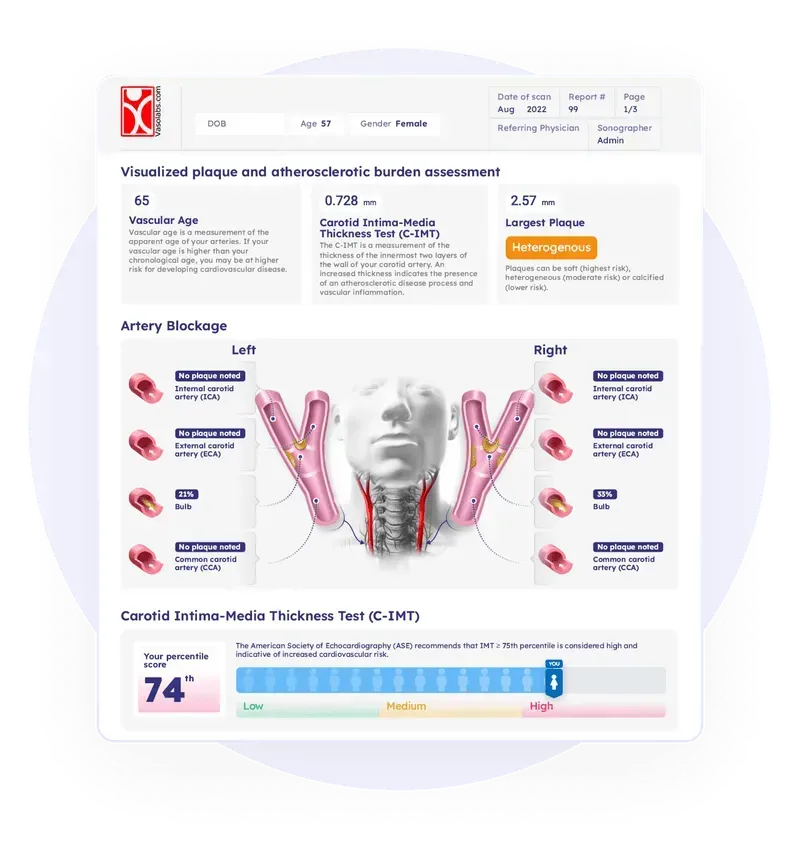
See your Vascular Age!
Soft or Calcified Plaque is visualized, you’ll see it all.
Track Your inflammation, Know your Artery Blockage.
Informed patients make better decisions.
Loved ones depend on you.
Do I Need a Heart Screening?
Here is a checklist of factors that put you at elevated risk for heart attack, stroke, and other forms of cardiovascular disease:
Over 40 years of age
Family history of heart disease/stroke
Overweight
Increased cholesterol level
High-fat diet
Tobacco user
High blood pressure
Diabetic
Metabolic syndrome
Erectile dysfunction
Psoriasis
Peace of Mind is Priceless

Looking back, it's chilling to realize how close I came to the edge. I opted for a test at Vasolabs on a whim, without any particular symptoms. Boy, am I glad I did! Turns out, my arteries were nearly clogged up - something regular doctors wouldn't have caught unless there were signs of a problem. By the time I got a couple of second opinions and returned to my regular doctor, my arteries were 95% blocked. If I hadn't taken the test when I did, I could have had a stroke. Trust me when I say this, going to Vasolabs was one of the best decisions I've ever made.
- George B
I was really worried about getting a heart attack because its already happened in our family. So taking this test gave me the peace of mind I was looking for. And it was so cool to see the age of my artery was younger than I was!!
- Barbara L.
I went to Vasolabs for their C-IMT testing, thinking it'd be a complicated deal, but nope! It was as easy as getting a photo taken. And guess what? They found an issue that could've been a silent threat. Thanks to them catching it early, my doctor and I are on top of it now. Honestly, I feel like I dodged a bullet. Big thumbs up for Vasolabs!
- Walter S.
I saw an ad on Facebook and I got the C-IMT Test for myself and my husband, it was such an easy process. And a great gift idea for family. It was really fun to look at the results and good to know I need to work on my health.
- Jessica F.
Frequently Asked Question
What is a C-IMT scan?
A C-IMT Scan is a non-invasive procedure that uses ultrasound technology to measure the thickness of your carotid arteries' walls. These arteries, located on each side of your neck, supply blood to your brain. Over time, plaque can build up in these arteries, causing them to thicken. This is often an early sign of atherosclerosis, a disease that can lead to serious conditions such as heart attacks and strokes.
Where do I go to get this scan?
For your quick, 15-minute appointment, simply head over to our facility located at 1414 South 600 West, Bountiful, UT 84010.
Who takes my test?
Dean Ence, an expert sonographer, will be handling your fast, no-pain test to figure out the 'age' of your arteries. This test checks how thick your artery walls are - thicker walls can mean inflammation. It's all simplified for you to understand easily. We also spot and show plaque, whether soft or hard, in your arteries. You get detailed pictures from the ultrasound for your records. Taking care of your health is our main goal!
How long does the C-IMT Scan and Report take?
The duration of the C-IMT scan can vary depending on various factors, like the complexity of the patient's condition. Typically, a Vasometric scan takes around 15 minutes to complete. The report is done and delivered within 24 hours to you.
Will my insurance cover this C-IMT Scan?
No. Hospitals charge $800, but our cost is $249.

Our Mission:
Vasolabs is dedicated to promoting heart health by providing innovative, easy-to-access tests. We empower people with insights into their vascular health for early risk detection.
Our Vision:
To redefine cardiovascular care by shifting the focus from late-stage disease management to proactive prevention.


